
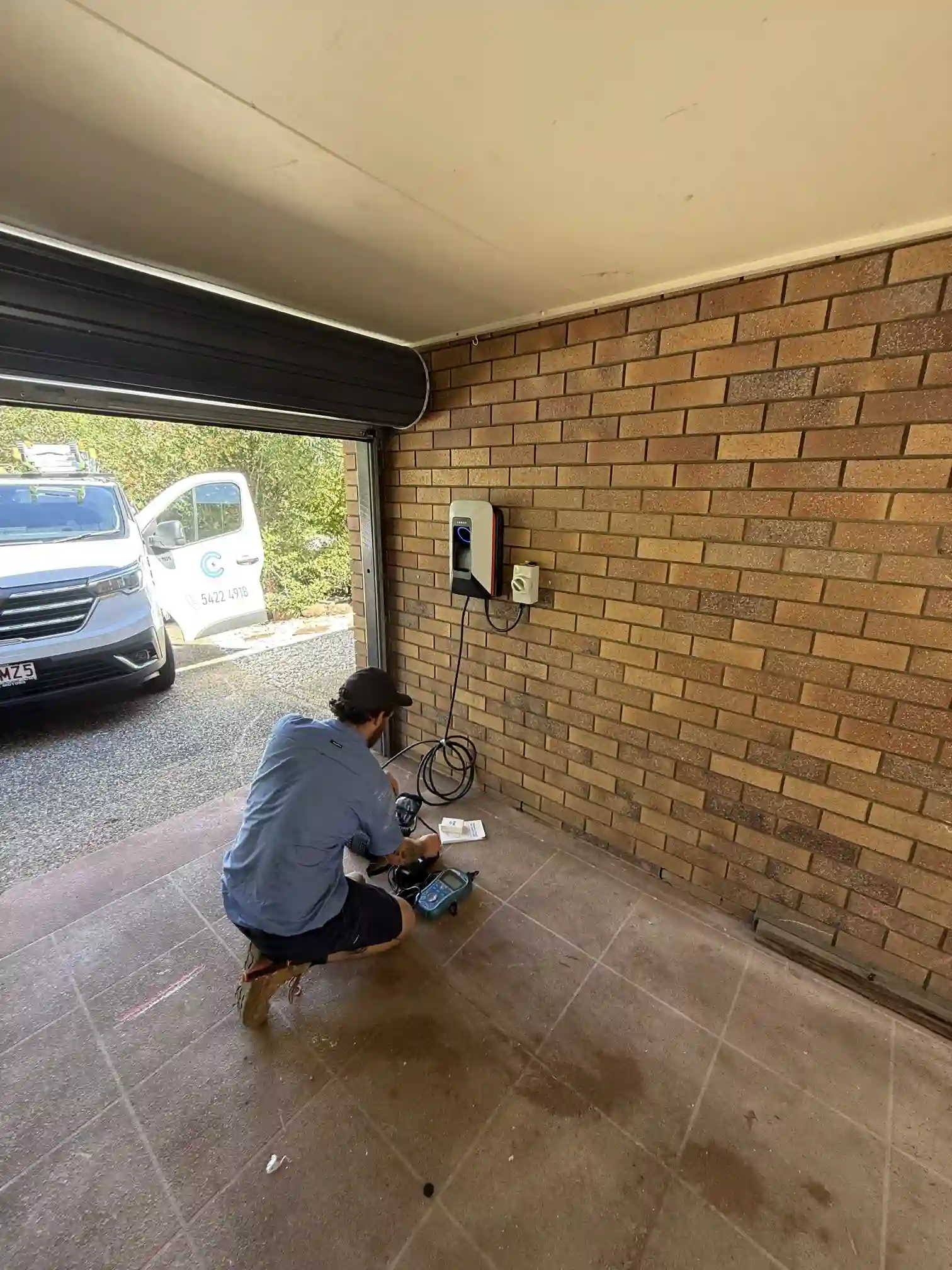
Plugging in at home: what you need to know
Yes, you can charge an EV from a standard power point, and it's generally safe when the power point, plug and wiring are in good condition. The real risks come from worn sockets, extension leads and adaptors, and old wiring behind the wall.
- Plug straight into the wall with the cable that came with the car.
- Never use extension leads, double adaptors or power boards.
- Check for heat in the plug and wall plate, especially in the first few charges.
A new EV has just arrived, you've got the portable cable in the boot and you're wondering if it's okay to plug it in and get going. Mostly, yes. But there are a few things that can go wrong, and none of them are the ones people usually worry about.
Can you charge an EV from a standard power point?
You can. Almost every EV and plug-in hybrid in Australia comes with a portable charging cable, sometimes called a mobile connector or a Level 1 charger. It plugs into a normal power point.
It's the slowest way to charge, but for plenty of people it's enough. Many households charge from a power point most nights and use public or workplace chargers for the occasional top-up.
Your car's battery size matters too. A small battery fills quickly on a slow charge, and a large one takes much longer. If your car has a big battery and you drive a lot, a standard power point may not keep up with your driving. Most EV owners find out within a few weeks. Many cars have an app that shows how much charge you gained overnight, so you can see for yourself.
How fast a power point really charges
A standard 10 amp power point delivers about 2.4 kW at best. A 15 amp point delivers a bit more, roughly 3.6 kW, but few homes have one.
| Source | Approx. power | Range added per hour |
|---|---|---|
| Standard 10 A power point | About 2 to 2.4 kW | 10 to 15 km |
| 15 A power point | About 3.6 kW | 20 km or so |
| Dedicated wall charger (single-phase) | Up to 7.4 kW | About 40 to 50 km |
Range added per hour of charging
Approximate. Actual figures depend on your car, its battery and the conditions.
Over an 8-hour overnight charge, a standard power point adds roughly 100 km of range. The average Australian passenger vehicle travels well under 40 km a day, so that covers a lot of people.
One night on a power point vs a typical day's driving
Overnight figure is approximate. Daily figure is the 2020 ABS average of 11,100 km per passenger vehicle, divided by 365.
If you drive a lot more than average, or you're covering long distances most days, that's when a faster option starts to make sense.
Why a sustained load is different to a kettle
A kettle runs for a couple of minutes and switches off. A car charger might run at near full load for eight hours or more. That's a very different test for a plug, a socket and the wiring behind them.
A portable charger draws a steady current that's close to what a power point is rated for, held for hours. It doesn't mean it's dangerous. It means anything that's worn, loose or poor quality will show up, and it'll show up as heat.
Myth check: are standard power points not designed for EV charging?
You'll see it claimed that power points aren't designed for the steady load of EV charging. It's not quite that simple.
One view
Australian wiring standards don't set a lower rating for a power point just because the load is continuous. A point rated for a given current is rated for it, however long you draw it. That's according to Energy Matters, which describes the opposing claim as contested.
The cautious view
Some councils and safety groups warn that regular, long charging from an ordinary power point can cause heat damage to the socket and plug over time, so it's fine from time to time but a risk if it's your every-night habit.
So the wiring itself isn't the villain. It's the weak links. A poor connection at the plug or the socket can make heat, and heat is what causes trouble. The myth hides the real problem, which is condition. And since both views agree that condition matters, it's worth having your power point checked if it's going to be your daily charger.
The real risks: worn sockets and loose plugs
Here's what actually goes wrong:
- A loose or worn socket that doesn't grip the plug firmly
- Corroded plug pins or socket contacts
- A plug that's been plugged in and out so often the contacts have loosened
- Cracked or damaged wall plates
- Cheap or damaged charging cables
Repeated plugging and unplugging can raise the resistance at the contact, and that causes heat build-up. In the worst cases, plugs and wall plates brown and melt. It's avoidable.
Extension leads, double adaptors and power boards
This is the big one. Don't use them.
Extension leads, double adaptors, power boards and travel adaptors aren't designed for a car charger's current for hours at a time. Many "heavy duty" leads are thinner than they look. They get warm, and a warm lead can go on to overheat.
One documented case involved an incompatible adapter that overheated and destroyed a garage and two vehicles. Plug the charger straight into the wall, and never charge two cars from one outlet.
Warning signs: warm plugs, discolouration and burning smells
Check the plug and the power point regularly, especially in the first few charges. Stop and unplug if you notice:
A plug or wall plate that's warm or hot
Discolouration or browning
A burning smell
Buzzing or crackling
A plug that's loose or hard to push in
The charger or safety switch tripping
If you see any of these, don't keep using it. Switch off at the wall if it's safe and call us.
Old wiring behind the wall in older homes
You can see the plug, but you can't see the wiring. In older homes, the cable behind the wall may have brittle insulation or tired connections.
Your car charger will find the weak spot in the system. If your house is older, or the garage power point was installed a long time ago, have an electrician check it before you charge from it regularly.
Shared circuits: what else is running at the same time
A garage or carport power point may share a circuit with other things, such as lights, the freezer, tools or an outside tap. A charger that draws a big load, plus a second appliance, can overload the circuit and trip it.
It's worth knowing what's on the same circuit, and avoiding running other big appliances while the car's charging.
Safety switch protection and the supplied charging cable
Check that the circuit has a working safety switch. That's one of the best protections you can have, and it should be standard in any modern home. Test it regularly with the test button.
Many portable charging cables have built-in protection as well, including their own RCD. Use the cable that came with your car, or one from the manufacturer or a reputable supplier. Avoid cheap, uncertified, modified or unbranded cables.
How to charge more safely from a power point
Do
- Use the factory-supplied cable
- Plug it directly into a sound, well-fitted power point
- Check the plug and wall plate for heat
- Switch off at the wall before unplugging
- Follow the manufacturer's instructions
- Have older power points checked first
Don't
- Use an extension lead, double adaptor or power board
- Charge two vehicles from one outlet
- Use cheap, modified or unbranded cables
- Ignore a warm plug or a burning smell
Following the manufacturer's charging guide is the simplest rule of all.
There are a few options. You can keep charging from a standard power point, get a dedicated circuit with a better outlet, or install a wall charger. Each type suits a different household, and you don't have to decide on day one. A sensible first step is a check of your existing setup by a licensed electrician, so you know where you're starting from.
When a dedicated circuit or wall charger makes sense
A power point is fine for many people. A dedicated circuit or wall charger makes sense if:
- You drive long distances most days
- You've only got one vehicle and it needs to be ready fast
- Your power point is old, worn or on a shared circuit
- You want to avoid wear on a plug and socket
- You want smart features, like scheduling or solar charging
| Option | Suits | Worth knowing |
|---|---|---|
| Standard power point | Short daily trips, second cars, a long overnight window | Slowest. Condition of the socket and wiring matters most. |
| Dedicated circuit with an industrial-grade outlet | Regular charging without the cost of a full wall charger | A solid, purpose-built connection. Good time to run a data cable too. |
| Wall charger | Long daily distances, one car that must be ready fast, smart features | Fastest. Needs a certified unit and a licensed electrician. |
If you charge regularly from a power point, a dedicated circuit with a weatherproof, industrial-grade outlet is a good middle path. It gives you a solid, purpose-built connection without the cost of a full wall charger. It's also a handy time to run a data cable alongside, so the charger can connect to the internet later on.
Step 1: Tell us
Call or send photos of your garage power point and switchboard.
Step 2: We inspect
We check the power point, wiring, circuit and safety switch.
Step 3: Fixed price, then installed
You get an upfront fixed written quote before we start.
If you do go for a wall charger later, choose one that's certified for Australian conditions and installed by a licensed electrician, so the setup is safe and approved. Your installer can explain what's involved at your location.
Charge safely, and charge with confidence
Connected Electricians and Cablers is a family-owned business in Bellmere, installing EV chargers and dedicated circuits across Moreton Bay and the Brisbane Northside. We hold Electrical Contractor Licence #90211, we're fully insured, and our work comes with a 5-year workmanship guarantee.
Charging from a power point: your questions answered
Can I charge my EV from a standard power point?
Yes. Almost every EV and plug-in hybrid in Australia comes with a portable charging cable that plugs into a normal power point. It's the slowest way to charge, but it's enough for plenty of people.
How fast does a standard power point charge an EV?
A 10 amp power point delivers about 2.4 kW at best, adding roughly 10 to 15 km of range an hour. Over an 8-hour overnight charge, that's roughly 100 km.
Can I use an extension lead to charge my car?
No. Extension leads, double adaptors, power boards and travel adaptors aren't designed for a car charger's current for hours at a time. Plug the charger straight into the wall.
What should I check on the plug and power point?
Feel for warmth, look for browning or discolouration, listen for buzzing, and check the plug isn't loose. If you notice any of these, stop, unplug and have it checked.
Is my older home okay for power point charging?
It depends on the wiring behind the wall, which you can't see. If your house is older, or the garage power point was installed a long time ago, have an electrician check it first.
When should I get a dedicated circuit or wall charger?
If you drive long distances most days, need one car ready fast, have an old or shared-circuit power point, or want smart features like scheduling or solar charging.
Want your garage power point checked?
Call us or send the details through our booking form, and we'll check the power point, wiring, circuit and safety switch before you charge from it regularly.
Book a power point checkSources: Energy Matters: Do you need a dedicated EV charger?; WA Government: Preparing for your new EV; City of Unley: Using EVs fact sheet; The Driven: Is it safe to charge an EV from any regular power point?; ABS: 2019/20 vehicle use. Charging speeds vary by vehicle.