
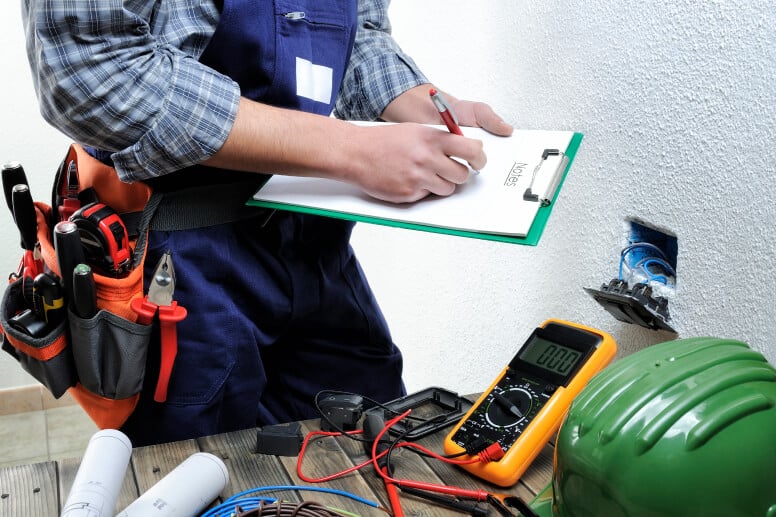
What a report you can forward as is looks like
A good electrical report for a property manager tells you what's wrong, how urgent it is and what to do next, in plain language with clear photos you can forward to the owner as is.
- Five questions answered clearly: what was checked, what was found, what's the risk, what needs doing, and how soon.
- Findings sorted by priority, with a matching fixed quote.
- No ringing the electrician back to explain it.
If you manage a rent roll, you're juggling tenants, owners and trades all day, and a report that makes you ring the electrician back to explain it is just another job on your list. Here's what a useful report looks like, and what we put in ours.
What property managers need from an electrical report
A report has one job: to help you make a decision and take action. You've got to tell the owner what's happening, and you've got to keep the tenant safe.
So the basics are simple. What was checked? What was found? What's the risk? What needs doing, and how soon? If a report answers those five things clearly, it's done its job.
In Queensland, owners and tenants both have responsibilities for electrical safety in a rental. The Residential Tenancies Authority (RTA) says property managers act as the owner's representatives and must pass on and action repair requests promptly. That puts you in the middle. A report you can send straight to the owner makes that part easier.
| Who | Electrical responsibilities in a Queensland rental |
|---|---|
| Owner | Make sure the property doesn't breach health and safety laws, including the Electrical Safety Act, keep it in good repair, and meet the minimum housing standards, which cover electrical fixtures and fittings |
| Property manager | Acts for the owner. Passes on and actions repair requests promptly, and makes sure the agreement lists an emergency repair contact |
| Tenant | Reports electrical issues promptly and doesn't attempt electrical repairs |
| Electrician | Only a licensed electrical contractor can do electrical work |
Plain-language findings instead of trade jargon
Owners aren't electricians. If a report says "RCD fails to trip within required time on circuit 3," most people will glaze over.
A better way to say it is: "The safety switch on the power points didn't switch off fast enough when we tested it. That means it might not protect someone from a shock. It needs replacing."
Trade jargon
"RCD fails to trip within required time on circuit 3."
Plain language
"The safety switch on the power points didn't switch off fast enough when we tested it. It might not protect someone from a shock. It needs replacing."
Same facts, but now the owner understands why they're paying for it. We write the findings in everyday language first, and we can include the technical detail underneath for the file. You get both, and nobody has to translate.
Photos that show the fault, the location and the fix
A photo is worth a hundred words, especially when you're sending it to an owner who's never seen the switchboard.
A good report has photos that show three things: the fault itself, where it is in the property, and what the fixed version looks like when it's done. A close-up of a cracked power point is useful. A wider shot showing it's in the kids' bedroom is even better.
1. The fault
A clear close-up of the problem.
2. The location
A wider shot showing where it is in the property.
3. The fix
What the repaired version looks like when it's done.
We take clear, labelled photos on every job. If something looks fine now but needs watching, like early corrosion, we photograph it so you've got a record to compare next time.
Urgent, soon and monitor: a simple priority system
Not every item is an emergency, and owners hate being told everything is urgent. A simple three-level system keeps it clear.
| Priority | What it means | Example |
|---|---|---|
| Urgent | Safety risk now, act straight away | Exposed live wires, scorched power point, no safety switch |
| Soon | Not dangerous today but should be fixed | Ageing switchboard, cracked switch plate |
| Monitor | Fine for now, check again later | Minor wear, items near end of life |
When everything's sorted this way, you can tell the owner exactly where to put their money first. It also protects you, because there's a clear record showing you passed on the right information.
What counts as an emergency repair
Under the Residential Tenancies and Rooming Accommodation Act, a dangerous electrical fault is classed as an emergency repair. Electrical faults that aren't a safety hazard go through the normal repairs process. If a tenant arranges emergency repairs themselves, the owner or manager must reimburse them or pay the invoice within seven days.
Safety switch testing and records
In Queensland, every power point circuit in a rental must have a safety switch. If one is missing, the owner must arrange an approved switch, and it has to be installed by a licensed electrician. Breaches of the Electrical Safety Act can bring significant fines or imprisonment, particularly where someone recklessly exposes another person to a risk.
Safety switches should also work. The Electrical Safety Office recommends testing them every three months using the test button. The owner, manager or tenant can do the test button check, and that can be agreed at the start of the tenancy. If the owner or manager tests, they must give proper notice and an Entry Notice (Form 9), stating who's coming and when.
Check the notice period
The required notice depends on the reason for entry, and the RTA has updated its figures over time. At the time of writing, its Form 9 page lists 48 hours for smoke alarm work and for safety switch installation or repairs. Always check the current Form 9 before you book.
We test safety switches with an instrument and record the results, so you've got proof they trip when they should. It's a good habit to do it at the same time as smoke alarm checks. And a written record is handy if anything's ever questioned.
Smoke alarm checks that match Queensland rules
Smoke alarms are a legal requirement, and the rules have been tightening. Alarms need to be photoelectric and interconnected, in every bedroom, in hallways that connect bedrooms, and on each level. From 1 January 2027, those requirements apply to all homes, so any rental that hasn't caught up needs to.
| Who | Smoke alarm job |
|---|---|
| Owner or manager | Test and clean alarms within 30 days before the start of a tenancy, including a renewed tenancy |
| Tenant | Test and clean at least once every 12 months |
| Licensed electrician | Install or replace hardwired alarms |
An alarm is generally fine to keep if it's photoelectric, interconnected, less than 10 years old and working when tested. Replace any that contain an ionisation sensor, aren't interconnected or are too old. A 240-volt alarm has to be replaced with another 240-volt alarm, which needs a licensed electrician.
We can check alarms during a safety inspection, replace any that need it and note the dates in your report, so you know when each one expires. That saves you from tracking it in a spreadsheet.
Switchboard, wiring and power point condition
A thorough inspection looks at more than just safety switches and alarms.
We check the switchboard for age, damage, overheating and signs of DIY work. We look at power points, switches and light fittings for cracks, scorch marks and loose parts. We check what we can see of the wiring, including the roof space where it's safe to do so, and we note anything that doesn't look right.
Rentals have a lot of wear and tear. Tenants plug in heaters, air conditioners and extension boards, and things get knocked about. A good report separates normal wear from real problems, so the owner doesn't feel they're being upsold.
Quotes that are clear enough to send to the owner
Owners want to know what they're paying for and why. A vague quote leads to phone calls and delays.
Ours are upfront, fixed and in writing. Each item in the report links to a line in the quote, so the owner can see the problem and the cost side by side, and approve what they want. If we've found five things, they can say yes to the urgent two and decide on the rest later.
For standard jobs we can often quote from photos, and we usually get it back to you within 24 hours. No surprises once the work starts, because the price we quote is the price you pay.
Same-day and after-hours callouts for tenants
Electrical faults don't wait for business hours. A power point goes dead on a Friday night, or a tenant smells burning on a Sunday.
We run a 24/7 emergency line, and we've earned a 5.0 Google rating with reviews that mention our after-hours response. When a tenant calls you, you can pass our number straight on, knowing someone will answer.
For non-urgent repairs, we'll work with you and the tenant to find a time that suits. And we keep you in the loop, so you're not left chasing for updates.
Records to keep for compliance and insurance
If something goes wrong, records matter. An insurer or a tribunal might ask when the safety switches were tested, who did the work, and what they found.
- Every inspection report
- Safety switch test results
- Smoke alarm records
- Compliance certificates for any electrical work
- Quotes and approvals from the owner
We'll send you everything in a tidy digital format, so it's easy to file against the property. Check that any electrician you use holds a current licence. You can look up a licence on the Electrical Safety Office website. Ours is Electrical Contractor Licence #90211.
How we write up a job so you can forward it as is
Here's how our reports are set up, so there's no rework on your end.
Step 1: Inspect
We test, photograph and record everything on site.
Step 2: Write up
Findings go in plain language, sorted by priority, with a matching quote.
Step 3: Send
You get a report that's ready to forward to the owner.
Each report names the property, the date, who attended and what was checked. Findings are in everyday words, each with a photo and a priority. Recommendations come with a clear quote. And there's space for technical detail if you need it for the file.
Keeping tenants informed and access arranged
Tenants are people with busy lives too, and they'll often have questions. Will the power be off? How long will it take? Do I need to be home?
We can coordinate access with you or directly with the tenant, whichever you prefer. The entry notice itself is yours to issue. We give a clear time window, let them know if the power needs to be off, and tidy up before we leave. Many tenants don't need to be home all day, and we'll tell them upfront if they do.
If you manage properties across Moreton Bay and the Brisbane Northside, we'd love to help. We're a family-owned team in Bellmere with a 5-year workmanship guarantee on our work. Send us an address, and we'll put together an upfront, fixed written quote for your next inspection or repair.
Property manager electrical report questions we get asked most
What should an electrical report for a rental include?
What was checked, what was found, the risk, what needs doing and how soon. Ours name the property, date and attendee, with each finding in plain language, with a photo and a priority.
Does every rental need a safety switch?
Yes. Every power point circuit in a Queensland rental must have one. If it's missing, the owner must arrange an approved switch, installed by a licensed electrician.
How often should safety switches be tested?
The Electrical Safety Office recommends every three months using the test button. If the owner or manager tests, they must give proper notice and an Entry Notice (Form 9).
Who is responsible for smoke alarms in a rental?
Both. The owner or manager tests and cleans alarms within 30 days before a tenancy starts, and the tenant tests and cleans them at least once every 12 months.
Is an electrical fault an emergency repair?
A dangerous electrical fault is classed as an emergency repair. Faults that aren't a safety hazard go through the normal repairs process.
Can you quote from photos?
For standard jobs we often can, and we usually get it back within 24 hours. Each report item links to a line in the quote.
Want reports you can forward without a phone call?
Send us an address, and we'll put together an upfront, fixed written quote for your next inspection or repair.
Get my quoteSources: RTA: Electrical safety in rentals; RTA: Smoke alarms; RTA: Entry notice (Form 9); RTA: Premises, condition and repairs fact sheet; Electrical Safety Office Qld: rental properties; QFD: Smoke alarms in Queensland. This is general information, not legal advice, and requirements change, so check the current RTA forms and guidance.