
Bedroom data points in Caboolture homes are worth installing when a device needs fast, stable internet and Wi-Fi just isn’t cutting it. If you’ve ever watched the kids’ gaming sessions grind to a halt mid-match, or sat on a video call in the back bedroom while the connection stutters, you already know the pain. The WiFi in the back room keeps dropping, and it’s not the NBN’s fault. It’s the wall between you and the router.
What is a data point and how does it differ from WiFi
A data point is a wall socket that you plug an Ethernet cable into, just like a power point but for your internet connection. Behind the wall, a cable runs back to your router or network switch, giving you a direct, wired connection to your internet service.
WiFi sends a wireless signal through the air. That signal degrades through walls, competes with other devices, and can be affected by interference from neighbouring networks, microwaves, and even the Moreton Bay humidity that plays havoc with electronics in coastal homes around Caboolture and Bribie Island.
A wired data point sidesteps all of that. The signal travels through a cable, not the air, which means it doesn’t drop out and doesn’t slow down based on how many devices are competing for bandwidth.
Why bedrooms are increasingly tech-heavy spaces worth wiring
Ten years ago, the bedroom was for sleeping. Today it’s where the kids do homework on a laptop, where the smart TV streams Netflix every night, where the teenager runs their gaming console and Discord simultaneously, and where more and more adults have set up a work-from-home office.
The average Australian household now has more than 20 connected devices [find a source for this info], and a good chunk of them end up in bedrooms. When those devices are running on Wi-Fi, they’re competing for signal. When they’re wired, they’re not competing with anything.
Installing a bedroom data point is one of the most practical network upgrades a homeowner in Caboolture or North Lakes can make. It’s not glamorous, but the reliability difference is real.
When a bedroom data point is genuinely worth installing
A wired Ethernet port in the bedroom makes sense when:
- A smart TV is used for high-definition streaming or gaming and buffering is a recurring problem
- Someone in the household works from home and needs a stable, consistent internet connection for video calls
- A gaming console is in regular use and online play is affected by lag or drop-outs
- The bedroom is far from the router and Wi-Fi signal strength is visibly weaker
- Multiple devices in the bedroom are all fighting for wireless bandwidth at the same time
In these cases, a single Cat6 data point can solve the problem permanently, rather than relying on range extenders or mesh nodes that add latency and complexity.
When you can safely skip the bedroom ethernet port
Not every bedroom needs a data point. If the room is used primarily for sleeping, and the only connected device is a phone that charges overnight, there’s no real case for running cable.
Guest bedrooms with occasional use, young children’s rooms where streaming is limited to a tablet, or rooms that are close to the router and already get strong Wi-Fi signal are all reasonable candidates to leave unwired, at least for now.
The key question is: what’s actually in the room, and how reliant is it on the internet?
Kids’ rooms and gaming setups: the case for going wired
Here’s something most parents don’t realise: gaming on Wi-Fi isn’t just slower, it’s less stable. It’s the inconsistency that kills the experience. A connection that drops from 50ms latency to 150ms mid-game is more disruptive than a connection that sits steadily at 80ms. Wi-Fi is prone to those spikes. A wired connection isn’t.
If there’s a PlayStation, Xbox, or PC gaming setup in the kids’ room, a data point is worth serious consideration. Online gaming is particularly sensitive to latency and packet loss, which is exactly where Wi-Fi struggles and wired connections shine.
Moving the console or gaming PC to a wired connection also frees up Wi-Fi bandwidth for phones, tablets, and smart home systems, so the whole household benefits even when only one device switches from wireless to wired.
Master bedroom considerations - smart TVs, work-from-home setups, and streaming
Smart TVs and streaming devices like Apple TV, Chromecast, and similar services are the single most common reason people in Caboolture and Moreton Bay ask about bedroom data points.
A smart TV pulling 4K content uses significant bandwidth. If it’s doing that over Wi-Fi while someone else is on a video call in the next room, and the kids are gaming, you’re asking a lot of a wireless network that was designed for a different era.
For master bedrooms that also double as home offices, the case for a wired data point is even stronger. A reliable, fast, low-latency connection directly to the desk means no frozen video calls, no dropped connections during file uploads, and no excuses when the morning meeting hits.
Future-proofing your home network room by room
The cheapest time to install data cabling is during a renovation or when walls are already open. The most expensive time is after the fact, when cables need to be run through finished walls and cavities.
Planning for the future means thinking about what each room might need in five to ten years, not just what it needs today. A bedroom that houses a young child now may need a proper workstation setup by the time they’re in high school. Installing a data point now, even if it’s not immediately needed, costs a fraction of retrofitting later.
The general principle is: if in doubt, install it. A capped-off data outlet in a wall costs almost nothing extra when the cabler is already on site. Coming back later to run cable through finished walls costs significantly more.
Cat6 vs Cat6a: which cable to use in a Moreton Bay home
For most residential installations, Cat6 is the right choice. It supports 10 Gbps speeds at cable runs up to 55 metres, and 1 Gbps well beyond that. For the typical distances inside a home in Caboolture or Narangba, Cat6 is more than sufficient.
Cat6a supports 10 Gbps at full 100-metre runs. It’s a larger, stiffer cable that’s harder to route through tight wall cavities. For most homes, the extra capacity isn’t needed and the additional cost and installation difficulty aren’t justified.
Where Cat6a becomes relevant is on larger properties, homes with long cable runs to outbuildings, or situations where the installation needs to carry data as part of a broader structured cabling system with particularly long cable paths.
If you’re in a newer home in Caboolture West or North Lakes, Cat6 will serve you well for a decade or more.
How much does a bedroom data point cost to install in Caboolture
The cost of a bedroom data point installation in Caboolture typically ranges from around $150 to $300 per point depending on wall construction, cable run length, and access difficulty. Homes with accessible roof cavities or subfloor access are generally simpler and cheaper to cable than homes with concrete slabs or complex wall construction.
Getting multiple data points installed in one visit is more cost-effective than scheduling separate jobs. If you’re already thinking about the master bedroom, it’s worth pricing the kids’ rooms at the same time.
Costs vary between installers and depend heavily on the specifics of the job. A licensed cabler can usually quote from photos, which saves time and avoids a site visit just to get a number.
The cost difference between installing now vs retrofitting later
This is the one that surprises most homeowners. Installing a data point during a renovation or alongside other electrical or data cabling work might add $150 to $200 to a job. Returning to the same wall after renovation is complete, routing cable through finished plasterboard, and patching up the access holes can cost three to four times that amount per point.
If you’re renovating, painting, or having any other trade work done that opens up wall cavities, that’s the moment to add data points. The incremental cost is small. The cost of coming back later is not.
Common mistakes homeowners make when planning data cabling
The most common mistake is not planning far enough ahead. Homeowners install one point per room, then wish they’d put in two. Or they install in the obvious spots and forget about the corner where the TV will eventually move.
Other common errors include:
- Not considering where the patch panel or router will sit, and ending up with cables that don’t reach
- Installing points in the wrong wall because the furniture layout changed
- Choosing Cat5e when Cat6 costs barely more and lasts longer
- Not labelling cables, which causes headaches for anyone who needs to troubleshoot later
A licensed data cabler who takes the time to understand the room layout and intended use will help avoid all of these. It’s worth the conversation before the cable goes in the wall.
How Connected Electricians handles bedroom cabling with minimal wall disruption
One of the most common concerns we hear from homeowners in Caboolture, Morayfield, and across the Moreton Bay region is the worry about damage to walls. Nobody wants their bedroom pulled apart just to run a data cable.
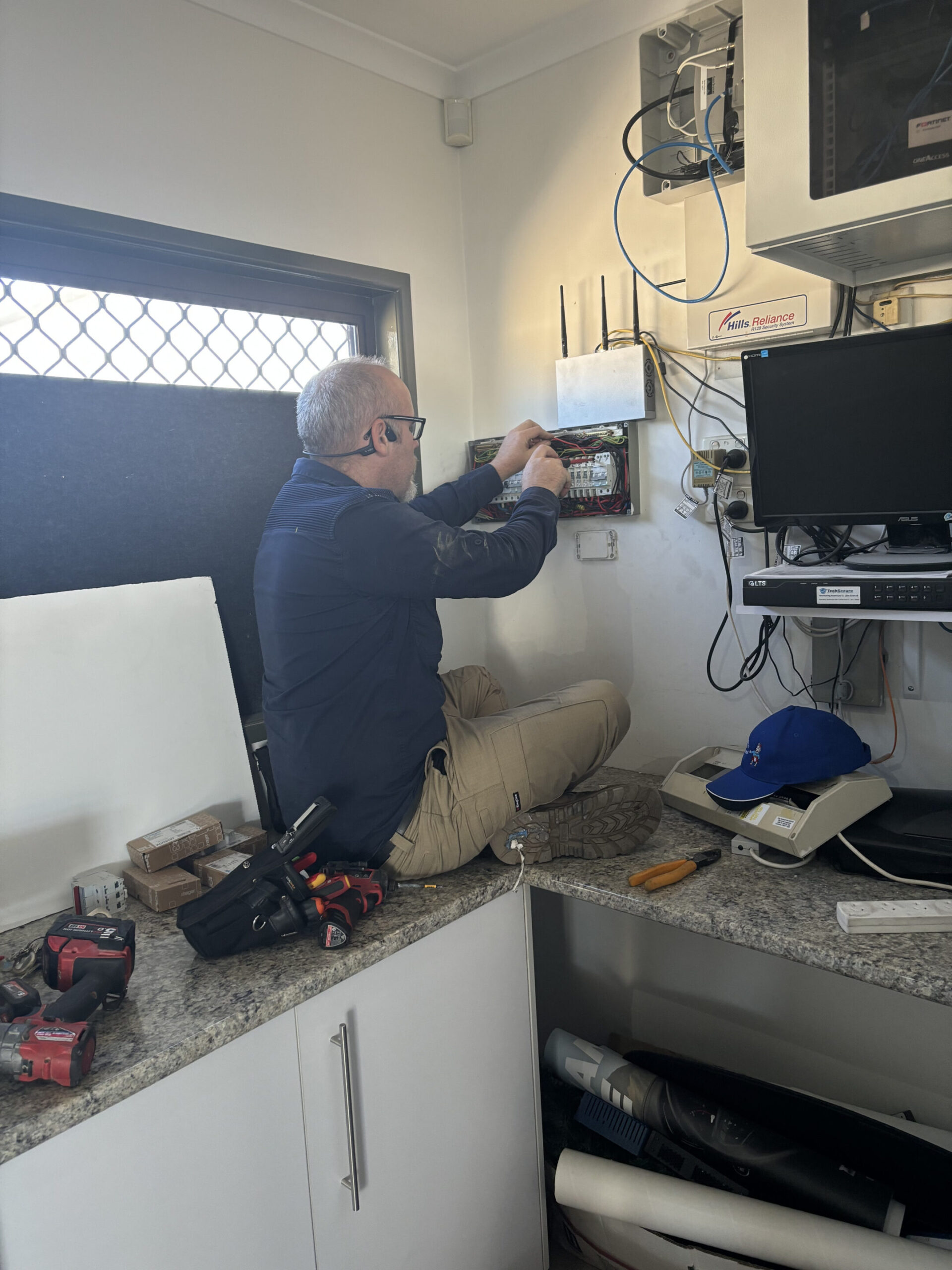
Josh and the team at Connected Electricians are licensed electricians and registered data cablers (Licence 90211, Cabler Reg 048361), and wall disruption is something we take seriously. We assess roof cavity and subfloor access before opening anything, and we use the most practical route to minimise patching.
We handle both the electrical and data cabling in a single visit. One tradie, one invoice, no waiting for a second trade to come back. We provide upfront pricing, often quoted from photos, so there are no surprises at the end. And every job is backed by a 5-year workmanship guarantee.
If you’re thinking about bedroom data points in your Caboolture, North Lakes, or Moreton Bay home, get in touch for a free quote. We’ll tell you what’s practical, what it’ll cost, and how to future-proof your home network while we’re there.