by Connected Electricians | May 25, 2026 | Blog
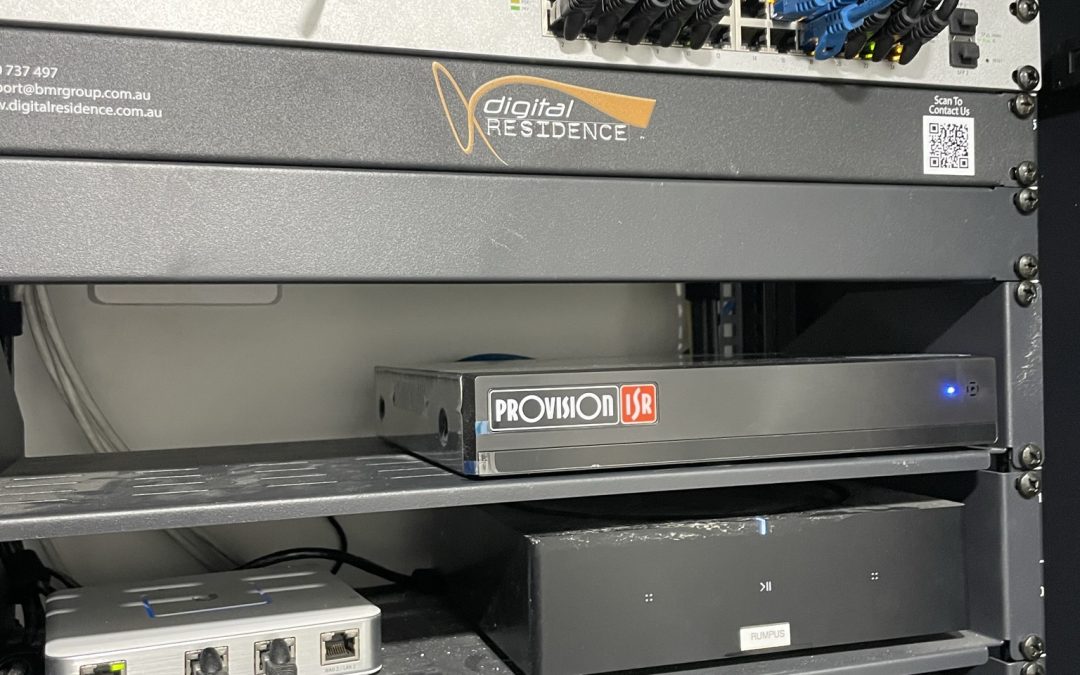
A messy network cabinet is not just an eyesore. It is an active risk to your business: a tangle of unidentified patch leads, loose connections, and equipment that nobody wants to touch because nobody knows what it does or where it goes. If you’ve ever opened a comms cabinet in a Caboolture office or retail premises and felt a slight dread, you already know what this article is about. Getting it sorted is one of the most practical network maintenance investments a small business can make.
What makes a network cabinet messy and why it matters for your business
A network cabinet becomes messy the same way every mess does: one small shortcut at a time. A cable that was a temporary fix but never replaced. A patch lead grabbed from the wrong drawer because the right one wasn’t nearby. A switch added without proper rack mounting because there wasn’t time to do it properly.
Each of those decisions seems trivial in the moment. Over time, they create a cabinet that is slow to work in, difficult to troubleshoot, and genuinely risky from a safety and reliability standpoint.
For small businesses across Moreton Bay, a disorganised comms cabinet means longer downtime when something fails, higher callout costs because it takes longer to find the fault, and unnecessary risk from overheating or unsafe electrical installation inside the cabinet.
The real risks of a disorganised comms cabinet - overheating, downtime, and fire
This is the part that surprises most business owners. A messy network cabinet is not just inconvenient. It can cause genuine damage to your systems.
When patch leads are bunched together across the front of a cabinet, they restrict airflow. Active equipment like switches and routers generate heat. Without airflow, that heat builds up. Overheated network equipment fails prematurely, sometimes suddenly and always at the worst time.
Extension leads plugged into other extension leads inside a cabinet are a documented fire risk [find a source for this info]. Power distribution should be handled by a proper PDU (Power Distribution Unit) mounted securely in the cabinet, not by consumer power boards stacked on top of each other.
Poor cable management also increases the risk of accidental disconnections during any maintenance work. In a tangle of unlabelled cables, it is easy to unplug the wrong thing.
Common network cabinet issues we find when we arrive on site
When Josh and the team arrive to audit a messy comms cabinet in a Caboolture or Moreton Bay business, the same problems appear repeatedly:
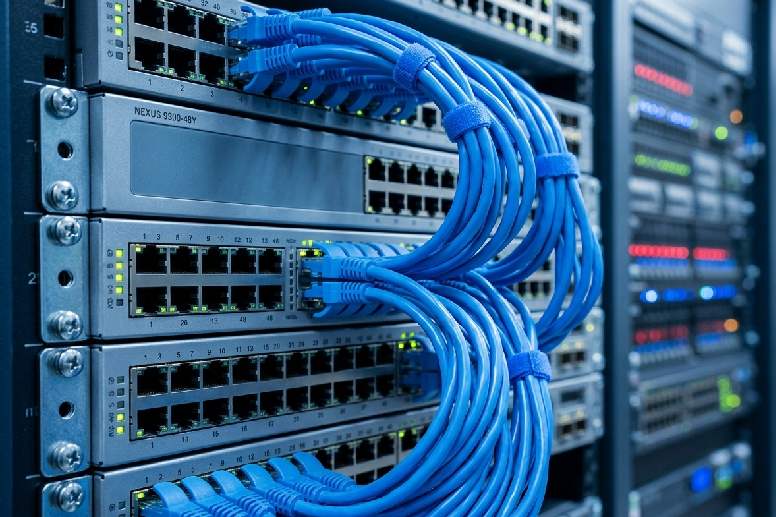
- Patch leads that are far too long, looped and bundled at the front of the cabinet
- Mix of different cable colours with no logical system applied
- Unlabelled ports and cables, meaning no one can identify what connects where without tracing each cable manually
- Active equipment placed on random shelves or sitting unsecured on top of other equipment
- Power boards plugged into power boards
- Old, decommissioned equipment that nobody has removed still occupying rack space
- NBN or modem equipment that’s been relocated but the old cabling has never been tidied
None of these is catastrophic on its own. Together, they create a system that nobody trusts and everyone is nervous about touching.
How poor patch lead length and colour creates confusion and slow fault-finding
This is a detail that matters more than most people expect. Patch leads should be just long enough to reach from the patch panel port to the corresponding switch port. Anything longer creates coils that block airflow and obscure what’s connected to what.
A good patch lead length for most cabinet installs is around 25 centimetres. Clean installs use short leads routed neatly through cable management bars between each panel and switch.
Colour coding is the other half of the system. Yellow for phones, blue for data and workstations, green for Wi-Fi access points, red for server or critical infrastructure connections. When every cable type is a different colour, you can understand the structure of your network at a glance. When everything is the same colour, every fault becomes a detective exercise.
Why active equipment positioning inside the cabinet affects airflow and performance
Switches, routers, and firewalls generate heat. The cabinet design assumes that equipment is rack-mounted in the correct positions, with adequate space between devices for air to circulate.
When active equipment is stacked on improvised shelves, or when patch lead bundles block the face of the switch where the ventilation slots are, heat builds up inside the equipment. This shortens the lifespan of the hardware and increases the risk of failure.
The simple rule is: all active equipment should be properly rack-mounted, power distribution should be handled by a PDU mounted at the rear, and nothing should obstruct the airflow paths at the front or rear of the equipment.
Step-by-step: how we audit and tidy a messy network cabinet
The first step in a cabinet tidy is understanding what’s there. Before anything is moved or removed, every connection is traced and documented. This takes time, but it’s what prevents the kind of situation where a cable is removed and half the office loses internet.
Once everything is mapped, decommissioned equipment and unused cables are removed. Then the active equipment is positioned correctly in the rack. Patch panels and switches are arranged so that ports align with the correct cable management path. New, correct-length patch leads in the right colours are installed. Cable management bars are fitted to keep everything clean.
The job finishes with labelling every port and producing documentation that means the next person who opens the cabinet knows exactly what they’re looking at.
Colour-coded patch leads and labelling - the simple system that saves hours
The value of a colour-coded, labelled system only becomes apparent the first time something goes wrong after it’s been installed. Identifying a failed port, tracing a connection, or adding a new device goes from a half-hour job to a five-minute one.
The system doesn’t need to be elaborate. A consistent colour scheme for patch leads, port labels on every patch panel position, and a simple cable map on the inside of the cabinet door is all it takes. That document becomes invaluable the first time a new technician needs to make a change without the original installer on site.
Patch panel and switch placement: how layout affects how quickly faults are found
The layout of equipment inside the cabinet directly affects how long it takes to find and fix a fault. The cleanest arrangement is to position switches directly below or above the patch panel ports they connect to, so that patch leads travel the shortest possible distance from panel to switch.
Cable management bars between each patch panel and switch row keep the leads tidy and allow each connection to be seen and traced without disturbing the rest of the installation.
When this layout is followed, fault-finding is fast. A port with a problem is identified, the patch lead is traced visually in seconds, and the fix is made without touching anything else.
What a properly tidied network cabinet looks like after a Connected Electricians visit
A properly tidied network cabinet has everything you can see making sense immediately. Patch leads are short, neatly routed through management bars, and colour-coded by system. Every port is labelled. Active equipment is rack-mounted with clear airflow space. The PDU is mounted at the rear and not overloaded. There are no loose cables, no mystery equipment, and nothing sitting where it shouldn’t be.
The inside door has a simple diagram showing which port connects where. The next time anyone needs to add a device, move a connection, or find a fault, they can do it confidently and quickly.
That’s what a properly finished commercial data cabling job looks like, and it’s what every Caboolture and Moreton Bay business deserves in their comms room.
How to keep your comms cabinet organised as your business grows
The key to a cabinet that stays tidy is having a system and following it when anything changes. Every new cable gets the correct length patch lead in the correct colour. Every new device gets rack-mounted properly. Every change gets updated in the documentation.
This is easier to maintain than it sounds, because a well-organised cabinet is faster to work in. The right habits develop naturally when the system is working.
For growing businesses that expect to add desks or devices in the next 12 to 24 months, planning ahead during the initial tidy means leaving spare patch panel ports, ensuring there’s rack space for additional equipment, and documenting the structure in a way that scales.
When a tidy-up is enough and when the whole cabinet needs replacing
Most messy network cabinets can be significantly improved with a proper tidy and re-documentation. The core infrastructure is usually sound; it’s the organisation and labelling that’s the problem.
Replacement becomes the right answer when the patch panel or cabinet is too small for the current number of connections and can’t be expanded, when the physical cabinet itself is damaged, incorrectly rated, or unsafe, or when the cable infrastructure feeding the cabinet is also degraded and needs to be replaced at the same time.
A licensed data cabler can assess this quickly. If the cabinet is the right size and the infrastructure is solid, a tidy-up is the most cost-effective solution. If the cabinet is already full or the underlying cabling is poor, the right answer is a proper structured cabling installation.
Getting documentation right - cable maps, port labels, and as-built diagrams
Documentation is the part of data cabling that most installers skip, and the first thing every business wishes existed when something goes wrong six months later.
At a minimum, every comms cabinet should have a cable map showing which physical cable runs to which patch panel port, which port connects to which switch port, and what device sits at the other end of each run. Port labels that match this documentation mean anyone can follow the system without needing to call the original installer.
As-built diagrams go one step further and show the physical layout of the premises, the location of every data outlet, and the path of every cable run. For commercial and strata clients across Caboolture and Moreton Bay, Connected Electricians provides clear service reports and photos as part of every job.
If your network cabinet is a problem you’ve been putting off, contact Josh and the team for a free quote. We’ll assess the cabinet, tell you what it needs, and give you a clear price before any work starts. One visit. Upfront pricing. Backed by a 5-year guarantee.

by Connected Electricians | May 18, 2026 | Blog
EFTPOS keeps dropping out in shops most often because the terminal’s internet connection is unstable, and in the majority of cases the cause isn’t the terminal itself but the underlying data cabling, router, or network setup behind it. If you run a cafe, retail shop, or service business in Caboolture or anywhere across the Moreton Bay region and you’ve had a transaction fail mid-swipe, you know exactly how much that costs, in lost sales, frustrated customers, and time spent on hold with your payment provider.
Why your EFTPOS keeps dropping out and who to actually call
Most merchants start troubleshooting EFTPOS issues the same way: restart the terminal, check the cables, call the payment provider. The payment provider tells them the terminal is fine and the problem is the internet. The internet provider tells them the connection is fine. Nobody fixes anything.
Here’s what’s actually happening in most cases: the EFTPOS terminal has a stable internet connection in theory, but the connection is being disrupted by poor data cabling, an overloaded router, a consumer-grade NBN plan that deprioritises traffic during busy periods, or a wireless signal that drops out under load.
The person to call is a licensed data cabler, not the payment provider. The cabling and network infrastructure behind the terminal is almost always the fixable part of the problem.
The link between poor data cabling and EFTPOS failures in retail
Data cabling that was installed years ago, or done cheaply, degrades. Connectors oxidise. Cable runs that were bent around corners or pinched under carpet develop faults. In Moreton Bay’s humid coastal environment, cable terminations inside wall plates can deteriorate faster than in drier climates.
A terminal that’s running over a degraded cable run will connect intermittently. It might work perfectly for hours, then fail during the lunchtime rush when traffic is highest and the marginal quality of the connection tips it over.
This kind of fault is almost impossible to diagnose without proper cable testing equipment. A visual check looks fine. A speed test might pass. But a cable test with a quality tester will show the fault clearly.
How a dedicated hardwired ethernet port stops EFTPOS drop-outs for good
The most reliable fix for a wireless EFTPOS drop-out problem is a dedicated, hardwired ethernet data point at the terminal location. A Cat6 cable from the terminal to the router or switch removes the wireless variable entirely.
A wired connection doesn’t compete with other devices for signal. It doesn’t drop out because someone walked between the terminal and the access point. It doesn’t slow down when the cafe fills up and every customer’s phone connects to the guest Wi-Fi.
For EFTPOS terminals that process transactions continuously throughout the day, a dedicated wired data outlet is not a luxury. It’s the same logic as running a dedicated power circuit for critical equipment: you don’t share it because you can’t afford it to fail.
WiFi EFTPOS vs wired EFTPOS: which is more reliable for a Moreton Bay shop
| Factor | WiFi EFTPOS | Wired EFTPOS |
|---|-----|-----|
| Connection stability | Variable, affected by interference and congestion | Consistent, unaffected by wireless issues |
| Reliability during busy periods | Degrades as more devices connect | Unchanged |
| Vulnerability to signal interference | Yes | No |
| Installation complexity | Lower initially | Requires data cabling run |
| Long-term reliability | Ongoing maintenance of wireless network | Set and forget |
For any business that can’t afford a failed transaction, wired wins. The installation cost of running a Cat6 cable to the terminal is typically recovered in the first month of not losing sales to dropped connections.
What to check before calling your payment provider about connection errors
Before spending an hour on hold with your payment provider, check these things first:
- Is the ethernet cable between the terminal and router or wall point seated firmly at both ends?
- Is the cable itself in good condition, not kinked, bent sharply, or running under furniture where it could be pinched?
- Is the router overloaded, with many devices connected and high traffic at the time of the failure?
- Is the terminal using Wi-Fi, and if so, is the access point nearby and unobstructed?
- Are the failures happening at predictable times, such as lunchtime or weekends, suggesting network congestion?
If the answer to any of these points to the network infrastructure rather than the terminal, the cabling and network setup is where to start.
Consumer NBN plans and why they hurt small retail businesses during busy periods
This is something most small business owners in Caboolture don’t know until it costs them. Consumer NBN plans use what’s called best-effort traffic management. When the network is congested, your connection is deprioritised. That congestion typically hits hardest from midday through the evening, which is exactly when most retail businesses are busiest.
Consumer plans also come with no guaranteed uptime, no service level agreement, and no priority fault resolution. When the connection goes down, you’re in the same queue as residential customers.
A business-grade NBN or broadband service provides priority traffic management, guaranteed uptime agreements, and faster fault resolution. For any business where the EFTPOS terminal is critical to trading, a business-grade internet service is a straightforward investment.
How router quality and overloaded networks cause transaction timeouts
A consumer-grade router handling 30 or more simultaneous devices will slow down, overheat, and drop connections. Most residential routers are designed for 10 to 15 devices. A busy cafe with guest Wi-Fi, staff devices, a EFTPOS terminal, a point-of-sale system, music streaming, and a CCTV system can easily exceed that.
When a router is overloaded, it starts dropping packets. Those dropped packets cause transaction timeouts. The EFTPOS terminal throws an error. The customer waits. The queue builds.
Upgrading to a business-grade router, or better still, a managed router with proper quality of service settings that prioritise EFTPOS traffic over guest Wi-Fi, eliminates this problem entirely. The cabling infrastructure feeding the router also needs to be solid for the router to perform reliably.
-
How we fix EFTPOS drop-out problems: a 3-step process
| Step 1: Diagnose | Step 2: Fix | Step 3: Test |
|------|-----|-----|
| Cable test every run, audit the router and network setup, identify the root cause | Install a dedicated Cat6 data point, upgrade cabling where needed, recommend router changes | Full connectivity test under load before we leave |
-
The cabling fix that eliminates EFTPOS problems in cafes and retail stores
The most effective fix for recurring EFTPOS drop-outs is almost always the same: a dedicated, hardwired Cat6 data point at the terminal location, installed by a licensed data cabler, with every run properly tested.
This removes the wireless variable. It removes the degraded cable variable. It ensures the terminal has its own clean path to the network with no shared interference.
Where the existing cabling infrastructure is also poor, the right solution is to address that as part of the same job. Replacing a degraded patch panel connection or re-terminating a cable that’s been faulty for years takes an hour. Losing sales to EFTPOS failures takes that cost back quickly.
Real cost of EFTPOS downtime for a small business in Caboolture
A cafe that processes 150 transactions per day at an average of $18 loses $2,700 in daily revenue if the EFTPOS terminal is down [find a source for this info]. Even one hour of downtime during lunch service represents hundreds of dollars in lost sales.
The cost of a hardwired data point installation in Caboolture is typically $200 to $350 including materials and labour. The payback period, even for a moderately busy retailer, can be measured in days.
This is the argument for getting it fixed properly rather than rebooting the terminal each time and hoping for the best.
How Connected Electricians cables EFTPOS terminals for strata and shopping centres
Shopping centres and strata properties present their own challenges. Work often needs to be coordinated with centre management, conducted outside trading hours, and documented for building records. Connected Electricians provides clear service reports and photos for every commercial and strata job, which satisfies property manager requirements and creates a record for future maintenance.
Josh and the team hold Licence 90211 and Cabler Reg 048361, which means every installation is compliant with Australian standards. For shopping centres in Caboolture and the broader Moreton Bay area, we’re familiar with the coordination requirements and can manage the communication with centre management directly.
When to upgrade your internal cabling to stop payment processing errors
If your EFTPOS terminal has failed more than twice in the past month and the payment provider has confirmed the terminal is functioning correctly, the internal cabling and network infrastructure is the likely cause.
Signs that a cabling upgrade is overdue include: intermittent failures during peak trading times, failures that coincide with high network usage, visible damage to cable runs or wall plates, and cabling that is more than 15 years old in a coastal Moreton Bay environment where humidity accelerates deterioration.
Don’t wait for the next failure during a busy Saturday lunch service. A cabling audit takes less time than you think, and the fix is usually straightforward.
What a professional data cabling audit looks like for a small shop
A proper data cabling audit for a small retail premises or cafe starts with a physical check of all visible cable runs and wall plates, followed by a test of every data outlet with a cable tester that measures signal quality, not just connectivity.
We identify any runs that are degraded, any terminations that are suspect, and any routing that’s causing issues. We check the router, the patch panel if there is one, and the path from the NBN connection to every device on the network.
The output is a clear report of what’s fine, what needs repair, and what needs replacement, with costs for each. No jargon, no unnecessary work. If your shop’s cabling is sound, we’ll tell you that and point you at the actual cause of the problem.
To book a cabling audit or get a free quote for a dedicated EFTPOS data point in your Caboolture or Moreton Bay business, contact Connected Electricians today. One job, done right, and the EFTPOS drop-outs stop.
by Connected Electricians | May 11, 2026 | Blog
Most small offices need a minimum of two data ports per desk to run reliably without the constant frustration of swapping cables or relying on Wi-Fi for devices that should be wired. If you’re setting up a small office in Caboolture, Morayfield, or anywhere across the Moreton Bay region and you’re wondering how many ports you actually need, the honest answer is: more than you think, and fewer than you’re afraid of. Getting this right from the start saves real money later.
How many data ports does a small office desk actually need
For a standard desk with a computer and a VoIP phone, two ports is the practical minimum. One for the computer, one for the phone. If the desk also has a docking station, a second monitor with a built-in network card, or a local network printer, you may want three.
The rule of thumb in commercial data cabling is to plan for what the desk needs today and leave room for one more. Desks grow. Devices multiply. A two-port outlet that seems generous now can look inadequate in two years.
For small businesses in Caboolture and surrounds, the typical layout is: two data points per desk as a baseline, with additional drops at printer locations, reception, and any dedicated point for a Wi-Fi access point.
Why two ports per desk is the practical minimum for most businesses
Here’s the thing most small business owners don’t realise until it’s too late: a single port per desk sounds fine until someone arrives with a laptop dock, a VoIP phone, and a workstation all at once. Then you’re buying desktop switches and running cables under desks, which is the kind of thing that looks unprofessional and causes network issues down the track.
Two ports per desk provides a clean solution. The computer connects directly. The phone connects directly. No sharing, no desktop switches creating unmanaged segments in your network. If your office runs VoIP, a wired connection for every handset is not optional. VoIP call quality over Wi-Fi is inconsistent, and dropped calls cost businesses real money.
Cabling for printers: dedicated port vs shared switch under the desk
Network printers in small offices often end up on someone’s desktop switch, which is a short-term fix that causes long-term headaches. A dedicated data port for each network printer is the cleaner, more reliable solution.
If the printer is in a fixed location, run a cable to it. Printers that are moved around regularly or only used occasionally can share a switch, but anything that’s a permanent fixture in the office deserves its own data outlet.
In small offices where the printer lives in a corner or near the reception desk, a single dedicated port keeps it on the structured network properly, makes troubleshooting simpler, and removes a cable running across the floor that’s a trip hazard.
Planning WiFi access points with PoE cabling in a small office
Wi-Fi access points should be ceiling-mounted wherever possible. This gives the best signal coverage, removes the access point from desk clutter, and looks professional. But a ceiling-mounted access point needs power. That power comes from a PoE (Power over Ethernet) switch via a Cat6 data cable.
This means every Wi-Fi access point location needs a data cabling run. For a small office in a 200-300 square metre space, you typically need one to two access points. Each one needs a cable run back to your comms cabinet or patch panel.
Planning these runs at the same time as your desk drops keeps the installation clean, avoids having cables running across ceilings after the fact, and means you’re covered when you need to upgrade to a faster access point in the future. The cable is already there.
The difference between a managed and unmanaged switch for your office
An unmanaged switch is plug and play. Devices connect, data flows. It’s fine for very small setups where everything on the network is trusted and simple.
A managed switch gives you control over your network. You can set VLANs to separate your business data from guest Wi-Fi. You can prioritise VoIP traffic to protect call quality. You can monitor port activity and identify devices causing problems. For any business office in Caboolture that runs VoIP phones, a managed switch with VLAN and QoS capability is the right choice.
The price difference between a basic managed switch and an unmanaged switch is not large. The operational difference, when things go wrong or when you need to isolate a problem, is significant.
How a patch panel and comms cabinet keep a small office tidy and expandable
A patch panel is the heart of a tidy, expandable office network. Every data cable from every desk, printer, and access point in the office terminates at the patch panel. Short patch leads then connect those ports to the switch.
Without a patch panel, you end up with long cables running directly from desks to a switch, making the cabinet messy, difficult to manage, and slow to troubleshoot. With a patch panel, moving a desk to a different port is a 30-second job. Identifying a problem is straightforward. Adding new points is simple.
For any small office data cabling installation in Moreton Bay, a proper comms cabinet with a patch panel is the foundation. It doesn’t need to be elaborate, even a small wall-mounted cabinet with a 12 or 24 port patch panel keeps everything manageable and professional.
Cat6 vs Cat6a for small office cabling in Moreton Bay
Cat6 is the standard for small office data cabling installations today. It handles 10 Gbps at runs up to 55 metres and 1 Gbps comfortably at full 100-metre distances. For most small offices in Caboolture, North Lakes, or Burpengary, Cat6 covers everything you need.
Cat6a becomes relevant when you have longer cable runs across a larger premises, or when you’re planning a higher-speed local network and want the full 10 Gbps performance at 100 metres. It’s a thicker cable that requires more care in routing, but for the right project it’s the better long-term choice.
If you’re not sure which is right for your office, a licensed data cabler can assess your premises and give you a straight answer with costs for both options.
Common small office cabling mistakes that cause headaches later
The most common mistake is underestimating port count. Businesses install one port per desk, then end up with desktop switches everywhere and an unmanaged, messy network within a year.
Other mistakes include:
- Skipping the patch panel and running cables directly to a switch, which limits flexibility
- Using Cat5e when Cat6 costs barely more and future-proofs the installation
- Not planning for the access point cable runs, then having to retrofit ceiling cables later
- Forgetting the conference room entirely until the first video call fails
- Not labelling cables and ports, which wastes time every time something needs to change
A commercial data cabling job done properly from the start avoids all of these, and costs less in the long run than fixing a poorly planned system.
Conference room cabling: what to plan for video calls and presentations
The conference room is the room most often left out of small office cabling plans, and the one that causes the most embarrassment when a client visit goes sideways.
A conference room needs at minimum: one or two data ports at the table for wired laptop connections, a separate port for a video conferencing system or smart TV, and a data outlet for a ceiling-mounted access point if coverage doesn’t reach adequately from the main office.
Video calls are bandwidth-intensive. Running a video conference over shared Wi-Fi in a small office is a gamble. Running it over a wired connection is not. If the conference room is used for client-facing presentations or regular team calls, a wired data outlet is not optional.
-
Getting your conference room right: a simple 3-step plan
| Step 1 | Step 2 | Step 3 |
|---|---|---|
| Identify every device that will use the room (laptop, TV, video system) | Plan one wired port per device plus one spare | Run Cat6 to a ceiling access point for guest Wi-Fi |
-
How to future-proof your office cabling when you expect to grow
The best time to install extra data outlets is during the initial cabling job. Adding two ports to a run that’s already being done adds minimal cost. Coming back to add those same two ports after the walls are closed and the office is furnished costs significantly more.
If you expect to add desks, think about where those desks might go and run cable there now. If you might take on additional staff, plan the comms cabinet for expansion. If you’re in a leased space, check whether you can install cable permanently or whether you need a flexible solution that comes out cleanly when the lease ends.
Future-proofing doesn’t mean installing cable to every corner just in case. It means thinking one step ahead and leaving yourself options.
What a small office data cabling job typically costs in Caboolture
Small office data cabling projects in Caboolture and the Moreton Bay area typically run from around $200 to $350 per data point installed, depending on cable run length, wall construction, and whether a patch panel and cabinet are included. A typical 5-desk office might range from $1,500 to $3,500 installed, though this varies considerably based on the specifics of the premises.
The most reliable way to get an accurate cost is a quote based on your floor plan or a site visit. At Connected Electricians, we often quote from photos, which saves you the wait for a site visit before you can make a decision.
How Connected Electricians approaches small office fit-outs across Moreton Bay
Josh and the team at Connected Electricians are fully licensed electricians and registered data cablers (Licence 90211, Cabler Reg 048361) with experience across commercial and small business installations throughout Caboolture, North Lakes, Burpengary, and the broader Moreton Bay region.
We handle both the electrical and data cabling in a single visit, which keeps the job clean and means you’re dealing with one tradie, one invoice. We provide upfront, fixed pricing and back every job with a 5-year workmanship guarantee.
If you’re planning a small office fit-out or looking to upgrade your existing data cabling, contact us for a free, no-obligation quote. We’ll assess your needs, recommend the right solution, and give you a clear price before any work starts.
by Connected Electricians | May 4, 2026 | Blog
Bedroom data points in Caboolture homes are worth installing when a device needs fast, stable internet and Wi-Fi just isn’t cutting it. If you’ve ever watched the kids’ gaming sessions grind to a halt mid-match, or sat on a video call in the back bedroom while the connection stutters, you already know the pain. The WiFi in the back room keeps dropping, and it’s not the NBN’s fault. It’s the wall between you and the router.
What is a data point and how does it differ from WiFi
A data point is a wall socket that you plug an Ethernet cable into, just like a power point but for your internet connection. Behind the wall, a cable runs back to your router or network switch, giving you a direct, wired connection to your internet service.
WiFi sends a wireless signal through the air. That signal degrades through walls, competes with other devices, and can be affected by interference from neighbouring networks, microwaves, and even the Moreton Bay humidity that plays havoc with electronics in coastal homes around Caboolture and Bribie Island.
A wired data point sidesteps all of that. The signal travels through a cable, not the air, which means it doesn’t drop out and doesn’t slow down based on how many devices are competing for bandwidth.
Why bedrooms are increasingly tech-heavy spaces worth wiring
Ten years ago, the bedroom was for sleeping. Today it’s where the kids do homework on a laptop, where the smart TV streams Netflix every night, where the teenager runs their gaming console and Discord simultaneously, and where more and more adults have set up a work-from-home office.
The average Australian household now has more than 20 connected devices [find a source for this info], and a good chunk of them end up in bedrooms. When those devices are running on Wi-Fi, they’re competing for signal. When they’re wired, they’re not competing with anything.
Installing a bedroom data point is one of the most practical network upgrades a homeowner in Caboolture or North Lakes can make. It’s not glamorous, but the reliability difference is real.
When a bedroom data point is genuinely worth installing
A wired Ethernet port in the bedroom makes sense when:
- A smart TV is used for high-definition streaming or gaming and buffering is a recurring problem
- Someone in the household works from home and needs a stable, consistent internet connection for video calls
- A gaming console is in regular use and online play is affected by lag or drop-outs
- The bedroom is far from the router and Wi-Fi signal strength is visibly weaker
- Multiple devices in the bedroom are all fighting for wireless bandwidth at the same time
In these cases, a single Cat6 data point can solve the problem permanently, rather than relying on range extenders or mesh nodes that add latency and complexity.
When you can safely skip the bedroom ethernet port
Not every bedroom needs a data point. If the room is used primarily for sleeping, and the only connected device is a phone that charges overnight, there’s no real case for running cable.
Guest bedrooms with occasional use, young children’s rooms where streaming is limited to a tablet, or rooms that are close to the router and already get strong Wi-Fi signal are all reasonable candidates to leave unwired, at least for now.
The key question is: what’s actually in the room, and how reliant is it on the internet?
Kids’ rooms and gaming setups: the case for going wired
Here’s something most parents don’t realise: gaming on Wi-Fi isn’t just slower, it’s less stable. It’s the inconsistency that kills the experience. A connection that drops from 50ms latency to 150ms mid-game is more disruptive than a connection that sits steadily at 80ms. Wi-Fi is prone to those spikes. A wired connection isn’t.
If there’s a PlayStation, Xbox, or PC gaming setup in the kids’ room, a data point is worth serious consideration. Online gaming is particularly sensitive to latency and packet loss, which is exactly where Wi-Fi struggles and wired connections shine.
Moving the console or gaming PC to a wired connection also frees up Wi-Fi bandwidth for phones, tablets, and smart home systems, so the whole household benefits even when only one device switches from wireless to wired.
Master bedroom considerations - smart TVs, work-from-home setups, and streaming
Smart TVs and streaming devices like Apple TV, Chromecast, and similar services are the single most common reason people in Caboolture and Moreton Bay ask about bedroom data points.
A smart TV pulling 4K content uses significant bandwidth. If it’s doing that over Wi-Fi while someone else is on a video call in the next room, and the kids are gaming, you’re asking a lot of a wireless network that was designed for a different era.
For master bedrooms that also double as home offices, the case for a wired data point is even stronger. A reliable, fast, low-latency connection directly to the desk means no frozen video calls, no dropped connections during file uploads, and no excuses when the morning meeting hits.
Future-proofing your home network room by room
The cheapest time to install data cabling is during a renovation or when walls are already open. The most expensive time is after the fact, when cables need to be run through finished walls and cavities.
Planning for the future means thinking about what each room might need in five to ten years, not just what it needs today. A bedroom that houses a young child now may need a proper workstation setup by the time they’re in high school. Installing a data point now, even if it’s not immediately needed, costs a fraction of retrofitting later.
The general principle is: if in doubt, install it. A capped-off data outlet in a wall costs almost nothing extra when the cabler is already on site. Coming back later to run cable through finished walls costs significantly more.
Cat6 vs Cat6a: which cable to use in a Moreton Bay home
For most residential installations, Cat6 is the right choice. It supports 10 Gbps speeds at cable runs up to 55 metres, and 1 Gbps well beyond that. For the typical distances inside a home in Caboolture or Narangba, Cat6 is more than sufficient.
Cat6a supports 10 Gbps at full 100-metre runs. It’s a larger, stiffer cable that’s harder to route through tight wall cavities. For most homes, the extra capacity isn’t needed and the additional cost and installation difficulty aren’t justified.
Where Cat6a becomes relevant is on larger properties, homes with long cable runs to outbuildings, or situations where the installation needs to carry data as part of a broader structured cabling system with particularly long cable paths.
If you’re in a newer home in Caboolture West or North Lakes, Cat6 will serve you well for a decade or more.
How much does a bedroom data point cost to install in Caboolture
The cost of a bedroom data point installation in Caboolture typically ranges from around $150 to $300 per point depending on wall construction, cable run length, and access difficulty. Homes with accessible roof cavities or subfloor access are generally simpler and cheaper to cable than homes with concrete slabs or complex wall construction.
Getting multiple data points installed in one visit is more cost-effective than scheduling separate jobs. If you’re already thinking about the master bedroom, it’s worth pricing the kids’ rooms at the same time.
Costs vary between installers and depend heavily on the specifics of the job. A licensed cabler can usually quote from photos, which saves time and avoids a site visit just to get a number.
The cost difference between installing now vs retrofitting later
This is the one that surprises most homeowners. Installing a data point during a renovation or alongside other electrical or data cabling work might add $150 to $200 to a job. Returning to the same wall after renovation is complete, routing cable through finished plasterboard, and patching up the access holes can cost three to four times that amount per point.
If you’re renovating, painting, or having any other trade work done that opens up wall cavities, that’s the moment to add data points. The incremental cost is small. The cost of coming back later is not.
Common mistakes homeowners make when planning data cabling
The most common mistake is not planning far enough ahead. Homeowners install one point per room, then wish they’d put in two. Or they install in the obvious spots and forget about the corner where the TV will eventually move.
Other common errors include:
- Not considering where the patch panel or router will sit, and ending up with cables that don’t reach
- Installing points in the wrong wall because the furniture layout changed
- Choosing Cat5e when Cat6 costs barely more and lasts longer
- Not labelling cables, which causes headaches for anyone who needs to troubleshoot later
A licensed data cabler who takes the time to understand the room layout and intended use will help avoid all of these. It’s worth the conversation before the cable goes in the wall.
How Connected Electricians handles bedroom cabling with minimal wall disruption
One of the most common concerns we hear from homeowners in Caboolture, Morayfield, and across the Moreton Bay region is the worry about damage to walls. Nobody wants their bedroom pulled apart just to run a data cable.
Josh and the team at Connected Electricians are licensed electricians and registered data cablers (Licence 90211, Cabler Reg 048361), and wall disruption is something we take seriously. We assess roof cavity and subfloor access before opening anything, and we use the most practical route to minimise patching.
We handle both the electrical and data cabling in a single visit. One tradie, one invoice, no waiting for a second trade to come back. We provide upfront pricing, often quoted from photos, so there are no surprises at the end. And every job is backed by a 5-year workmanship guarantee.
If you’re thinking about bedroom data points in your Caboolture, North Lakes, or Moreton Bay home, get in touch for a free quote. We’ll tell you what’s practical, what it’ll cost, and how to future-proof your home network while we’re there.
by Connected Electricians | Apr 27, 2026 | Blog
WFH internet dropouts are usually caused by weak Wi-Fi, overloaded gear, poor router placement, unsafe power, or poor data cabling in the home office. Power outage at 10 PM? A video call freezing during payroll, client meetings, or school pickup planning feels just as urgent when your household depends on the connection. Your family deserves safe, reliable power, always, and your work setup deserves the same attention as your switchboard, lighting, and appliances.
In Moreton Bay, many homes were not designed for today’s work from home load. Laptops, VoIP calls, smart TVs, phones, cameras, printers, and cloud backups may all compete for one modem in a corner. Most dropouts come from a few fixable mistakes.
Connected Electricians and Cablers proudly services the Moreton Bay area, including Caboolture, Morayfield, Burpengary, Narangba, Deception Bay, North Lakes, Woodford, Bribie Island, Bellmere, and nearby suburbs. The team provides electrical and cabling services for domestic, residential, and commercial customers, offers 24/7 emergency phone support, and is listed as a Registered Data Cabler, Master Electrician, smart wiring provider, and energy monitoring installer.
Mistake 1: Treating Wi-Fi Like It Is the Whole Internet
When people say “the internet keeps dropping out,” the real issue is often Wi-Fi, not the NBN service. Wi-Fi is the wireless hop between your device and router. Your internet service is the connection from your provider to the modem or network equipment. If a laptop drops out on Wi-Fi but a device plugged in by Ethernet stays stable, the fault is probably inside the home.
Before replacing your plan or blaming your provider, test a wired connection where possible. NBN troubleshooting guidance lists common in-home Wi-Fi issues such as appliances interfering with signal, out of date router firmware, and a plan that may not support the number of connected devices being used.
Fix: Put your main work computer on wired Ethernet where practical. If the room has no suitable outlet, a registered cabler can install a proper data point. This is cleaner and more reliable than loose leads under rugs.
Mistake 2: Putting the Router Where It Is Convenient, Not Where It Works
A router hidden in a TV cabinet, laundry cupboard, garage, or corner bedroom has to push signal through walls, appliances, glass, metal, and furniture. That may be fine for scrolling. It is not ideal for back to back Zoom calls, remote desktop sessions, file uploads, or cloud accounting.
A common Moreton Bay setup is the modem near the NBN entry point, then the home office at the opposite end of the house. Kitchens, bathrooms, block walls, large mirrors, air conditioners, and aquariums can weaken Wi-Fi. NBN’s notes mention microwaves and fish tanks as possible sources of interference.
Fix: Move the router higher, more central, and out in the open. Keep it away from microwaves, dense cabinetry, and large metal objects. For larger homes, consider a wired access point or mesh system with proper placement. Smart homes start with smart wiring. Don’t fall behind by trying to solve every room with one little box.
Mistake 3: Relying on Cheap Extenders for Serious Work
Plug-in Wi-Fi extenders can help, but they can also create weak spots. Many extenders repeat a weak signal, which means your office may show more bars while still suffering lag, packet loss, or random disconnects. That is why a setup can look “fixed” until a video call starts.
Cheap electrical jobs can cost you thousands later, and the same thinking applies to network shortcuts. If your work depends on stable internet, the best solution is usually structured: modem, router, wired backbone, and well-placed access points.
Fix: Use Ethernet where reliability matters most. For a detached office, garage workspace, upstairs study, or small commercial premises, ask about professional data cabling rather than daisy chaining extenders. In Australia, customer cabling work must be completed by a registered cabler or properly supervised. ACMA states that cablers must be registered and follow rules designed to protect customers, cablers, and telecommunications networks.
Mistake 4: Forgetting the Power Side of the Internet
Your modem, router, NBN box, switches, monitors, chargers, printer, and office lighting all rely on safe power. If one overloaded power board is carrying your whole workday, the problem is no longer just internet performance. It is electrical safety.
Sparks from your power point? Don’t ignore it. Flickering lights, warm plugs, buzzing outlets, nuisance tripping, or a burning smell are not “normal work from home issues.” Think your safety switches work? They might not. Queensland’s Electrical Safety Office says you can test a safety switch by pressing the test button, and if it does not flick off, a licensed electrician should check it.
Fix: Give your office a safe electrical foundation. Use quality surge protected equipment, avoid overloaded boards, keep cords visible and undamaged, and have a licensed electrician check suspect outlets, tripping circuits, or older switchboards.
The 7 WFH Dropout Mistakes and Practical Fixes
| Mistake |
What it feels like |
Practical fix |
| Weak Wi-Fi |
Calls freeze in one room |
Add a wired point or access point |
| Bad router location |
Works near the modem only |
Move it central, high, and open |
| Cheap extenders |
More bars but still laggy |
Use Ethernet or wired mesh nodes |
| Overloaded power |
Devices reset randomly |
Check circuits, boards, and outlets |
| Old router firmware |
Random dropouts |
Update firmware or replace aged gear |
| Too many devices |
Slow afternoons and evenings |
Review plan, router capacity, and load |
| Unregistered cabling |
Messy, unsafe, unreliable outlets |
Use a registered cabler |
Mistake 5: Using Old Gear With New Workloads
A router that handled emails in 2018 may struggle with today’s load. Video meetings, cloud storage, smart devices, streaming, and remote desktop tools all add pressure. The issue can be speed, but it can also be stability. Old routers may have weak processors, poor Wi-Fi standards, outdated firmware, or limited device handling.
Fix: Check the age of your modem/router, firmware, device count, and plan. If wired connections are stable but Wi-Fi is not, upgrade Wi-Fi hardware or add correctly placed access points. If both wired and wireless connections drop, check your provider’s outage page and restart equipment. Telstra’s NBN equipment guidance starts with checking outages, then turning power off, waiting 30 seconds, and turning it back on.
Mistake 6: Letting Everyone Fight for the Same Connection
Working from home is rarely one person on one laptop. It might be Mum on Teams, Dad uploading plans, a teenager gaming, two TVs streaming, cameras uploading footage, and a cloud backup running. In real homes, the busiest internet time is often when work, school, dinner, streaming, and homework collide.
Fix: Identify the devices that matter most. Plug in the work computer, point of sale device, business printer, or VoIP phone. Pause cloud backups during calls. Move entertainment downloads to quieter times. If you run a small business from home, get your network treated like business infrastructure, not consumer gadgets.
Mistake 7: DIY Cabling That Should Have Been Professional
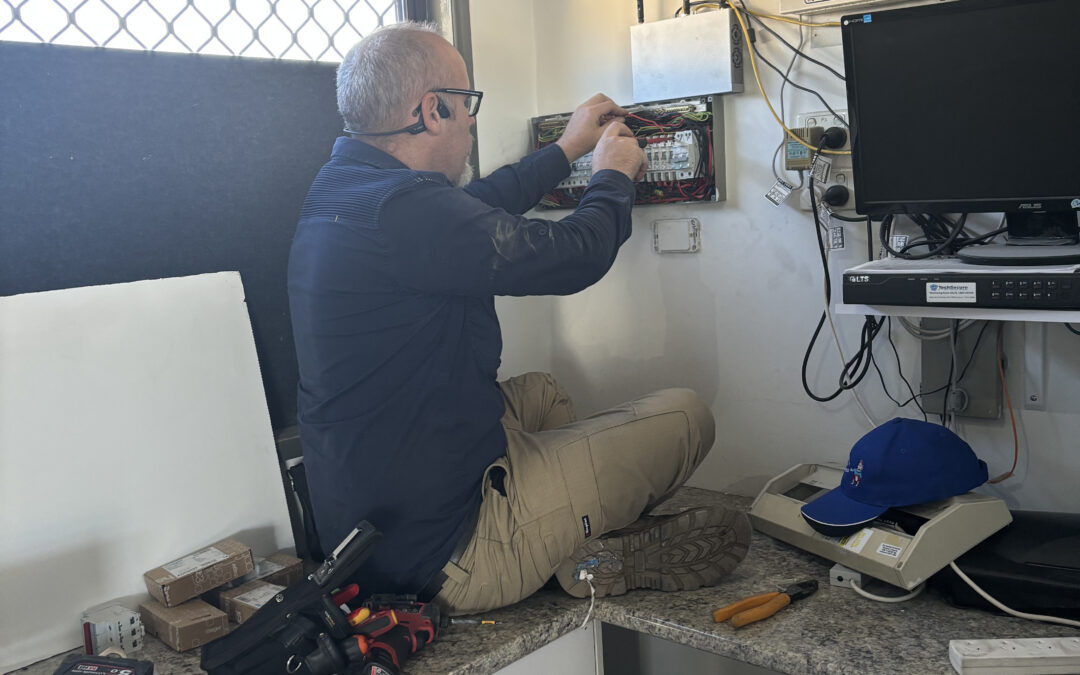
A long cable through a wall cavity, a home made socket, or a “mate of a mate” cabling job can create faults that are hard to see. It can also create compliance and safety problems. Unlicensed work could void your insurance, here’s the fix: use people who are licensed for the work they are doing.
Data cabling is not just about hiding wires. Good cabling considers cable route, separation from electrical circuits, termination quality, testing, labelling, future devices, and whether the setup suits the way the home or business actually runs. This is where a local registered cabler earns their keep.
Fix: Book a cabling assessment. Ask for the home office, modem location, NBN equipment, office power, Wi-Fi dead spots, and future needs to be reviewed together. That gives you a setup that is tidy, compliant, and easier to troubleshoot.
Our Simple 3 Step Process
- Check We look at the modem location, Wi-Fi coverage, power points, safety concerns, and where you actually work.
- Fix We install or repair what is needed, such as data points, smart wiring, safer outlets, lighting, or fault repairs.
- Test We confirm the setup works, explain what changed, and leave the workspace clean and ready to use.
When to Call a Local Electrician or Cabler
Not sure if it’s urgent? Call us and find out. Get professional help if you notice tripping circuits, hot plugs, burning smells, sparking outlets, damaged cables, repeated modem resets, dead data points, or a home office that only works when everything is plugged into one overloaded board.
You should also call if you are renovating, adding a granny flat, turning a garage into an office, upgrading to smart lighting, fitting security cameras, or moving your modem setup. Upgrading your home? Don’t forget the wiring.
Connected Electricians and Cablers is local to Moreton Bay and works across homes, residential neighbourhoods, and commercial premises. The business lists a standard phone number of 07 5422 4918 and an after-hours emergency number of 07 5422 4918 for urgent electrical support.
Reliable Work Starts With Reliable Wiring
Reliable tradies are so hard to find, until now. If your internet keeps dropping out while you work from home, do not keep blaming the laptop, restarting the modem, and hoping tomorrow is better. The real fix may be better router placement, cleaner power, updated hardware, or professional data cabling that gives your office a stable backbone.
Want fast, safe repairs tonight? Need an electrician you can count on? Connected Electricians and Cablers can help Moreton Bay homeowners and small businesses make their work from home setup safer, cleaner, and more reliable. Call 07 5422 4918 for a quote, or use the 24/7 emergency number, 07 5422 4918, when the issue cannot wait.
by Connected Electricians | Apr 20, 2026 | Blog
A data point at the TV location gives your smart TV, streaming box, or gaming console a direct wired internet connection, which can reduce buffering, dropouts, lag, and Wi-Fi congestion in Moreton Bay homes and small businesses. You shouldn’t have to wait days for an electrician, guess whether your Wi-Fi is the problem, or risk dodgy cabling behind the wall. Connected Electricians and Cablers helps local households and businesses get safer, cleaner, more reliable connectivity with licensed electrical and registered data cabling support across the Moreton Bay Region.
Why your TV buffers even when your internet plan looks fast
Here’s the frustrating part: your internet plan can be fast, your TV can be new, and your streaming app can still buffer.
That is because the speed arriving at your modem is only one part of the story. The signal then has to travel through your home or business. It may pass through walls, cabinetry, steel framing, appliances, mirrors, tiled areas, neighbouring Wi-Fi networks, and several connected devices before it reaches the TV.
Wi-Fi is convenient, but it is shared. Phones, laptops, tablets, cameras, speakers, printers, gaming consoles, smart lights, and visitors’ devices all compete for the same wireless space. NBN Co recommends connecting high-demand devices, including smart TVs and gaming consoles, directly to the router with Ethernet for the best speed performance and reliability.
A wired data point changes the path. Instead of asking your TV to fight for Wi-Fi in the lounge, rumpus room, bedroom, office, or shopfront, a data cable carries the connection directly from your modem, router, or network cabinet to a wall outlet near the TV.
What is a TV data point?
A TV data point is a dedicated network outlet installed at or near your television location. You plug an Ethernet cable from the outlet into your TV, Apple TV, Chromecast, Fetch box, Foxtel box, gaming console, or media player.
In practical terms, it gives your entertainment setup a stable lane of its own.
For many Moreton Bay homes, especially larger homes, renovated Queenslanders, townhouses, brick homes, and new builds with media rooms, the best result is not “stronger Wi-Fi everywhere.” It is putting wired connections where reliability matters most, then using Wi-Fi for mobile devices.
Why a data point at the TV location matters
1. Streaming is a high-demand job
Streaming video asks for a steady connection, not just a quick burst of speed. A webpage can load in stages. A movie, live sport stream, security camera feed, or video call needs a consistent flow of data.
When Wi-Fi dips for a few seconds, your TV may lower the picture quality, pause, or buffer. A wired connection is less affected by everyday wireless interference, so it is often the cleaner choice for the device your family watches most.
2. Your TV is usually in the worst Wi-Fi spot
TVs are often mounted on external walls, recessed into cabinets, surrounded by soundbars, tucked near power boards, or placed far from the router. Many people hide the modem in a garage, study, hallway, cupboard, or NBN box location, then wonder why the lounge room struggles.
If your router is not close to the TV, a data point gives you the direct connection without running a loose cable across the floor.
3. A wired TV can free up Wi-Fi for everything else
When the TV is hardwired, it no longer competes with phones, tablets, laptops, and smart home gear. That can make the whole network feel calmer, especially at night when everyone is online.
This matters for families working from home, kids doing homework, gamers chasing low latency, and small businesses using internet connected displays, EFTPOS, cameras, bookings, or point of sale systems.
Wi-Fi booster, mesh system, or data point?
A Wi-Fi booster can help in the right situation. A mesh system can be excellent in larger homes. But neither option changes the fact that wireless backhaul still depends on signal quality, placement, and interference unless the mesh units are wired.
| Option |
Best for |
Limitation |
| Wi-Fi booster |
Light browsing in a weak room |
Can repeat a weak signal |
| Mesh Wi-Fi |
Wider whole-home coverage |
Best when planned properly |
| TV data point |
Streaming, gaming, and fixed devices |
Needs professional installation |
For new homes and upgrades, recent Australian in-premises optimisation guidance recommends planning structured cabling, including CAT 6 from the NBN connection box to a central router point, with the option to run data cabling to other parts of the home for wired connections.
The simple 3-step process
Box 1: Check the real problem We look at where your modem, router, TV, and existing outlets are located, then discuss what is buffering, when it happens, and which devices matter most.
Box 2: Install the right cable path We plan a neat route, install the data point, terminate and test the connection, and keep the work area clean.
Box 3: Plug in and stream Once the outlet is ready, your TV or media device can connect by Ethernet, giving it a stronger foundation for streaming, gaming, and everyday use.
Why you should use a registered cabler
Data cabling is not just “running a cable.” In Australia, telecommunications and data cabling work must be performed by a registered cabler with the right registration and competencies, and the work must comply with the Wiring Rules, AS/CA S009:2020.
That matters because cabling can affect your home, your network, and the safety of people working around electrical services. It also matters because poor workmanship can create faults that are hard to diagnose later.
Connected Electricians and Cablers is listed as a registered data cabler, Master Electrician, and electrical contractor serving the Moreton Bay area, with service locations including Caboolture, Morayfield, Burpengary, Narangba, Deception Bay, North Lakes, Woodford, and Bribie Island.
When a TV data point is worth it
A TV data point is usually worth considering when:
- Your smart TV buffers even though other devices seem fine.
- The router is far from the lounge, media room, bedroom, office, or shop display.
- You stream 4K content, live sport, gaming, video calls, or security camera footage.
- Your home has brick, concrete, steel, multiple levels, or thick internal walls.
- You want a clean wall-mounted TV setup without visible leads.
- Your business relies on a screen, kiosk, meeting room display, or connected equipment.
What about power points, TV antennas, and wall-mounted screens?
Often, the best time to add a TV data point is when you are already improving the TV area. That might include a new power point behind a wall-mounted TV, a relocated outlet, a cleaner antenna setup, LED feature lighting, or a media cabinet tidy-up.
This is where using electrical and cabling professionals together helps. It means your power and low-voltage cabling can be planned neatly, separated correctly, and installed with the future in mind.
Cheap electrical jobs can cost you thousands later. Unlicensed electrical work is illegal and dangerous in Queensland, and the Queensland Electrical Safety Office provides a licence search so people can check electrical licence details.
Moreton Bay homes need practical connectivity
Moreton Bay homes are not all the same. A newer North Lakes home with a central communications cupboard has different needs from an older Caboolture home, a Morayfield rental, a Burpengary renovation, or a Bribie Island holiday property.
Some homes need one data point behind the main TV. Some need several outlets for a home office, gaming room, security recorder, or access point. Some small businesses need reliable cabling for EFTPOS, computers, cameras, display screens, and phones.
The right answer depends on the building, not a one-size-fits-all package.
That is why we prefer to ask clear questions, explain the options in plain English, and recommend what we would do if it were our own home or business. Worried about cost? Our quotes are upfront. Not sure if it’s urgent? Call us and find out.
Stop blaming the TV
Your TV may not be the problem. Your streaming app may not be the problem. Your internet provider may not even be the problem.
Sometimes the missing piece is the final few metres between your router and the screen.
A professionally installed TV data point can give your most demanding entertainment device the steady connection it needs, while keeping the room clean, safe, and ready for the way people actually live now.
Ready to stop the buffering?
Still dealing with buffering, dropouts, or messy cables around your TV? Connected Electricians and Cablers can help with data cabling, TV location data points, smart wiring, power points, fault finding, and 24/7 emergency electrical support across the Moreton Bay Region.
Call 07 5422 4918 for general bookings, or 07 5422 4918 for after-hours urgent electrical help. If you are in Caboolture, Morayfield, Burpengary, Narangba, Deception Bay, North Lakes, Woodford, Bribie Island, Bellmere, or nearby, get in touch for a free quote and practical advice from a local team that locally fixes it right the first time.




 A long cable through a wall cavity, a home made socket, or a “mate of a mate” cabling job can create faults that are hard to see. It can also create compliance and safety problems. Unlicensed work could void your insurance, here’s the fix: use people who are licensed for the work they are doing.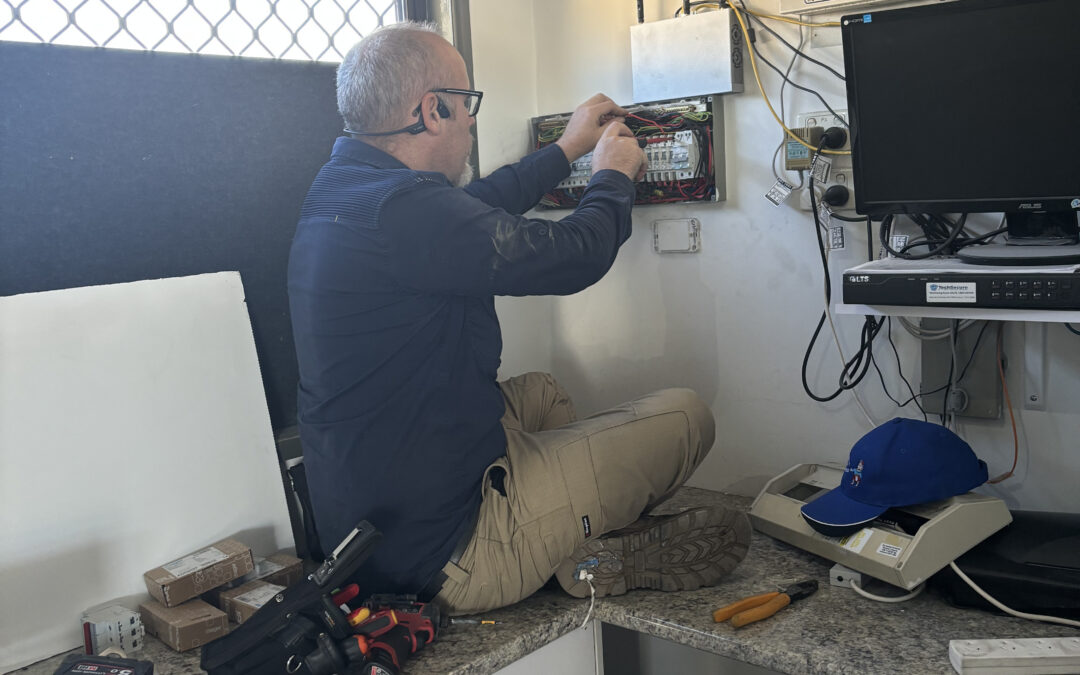

 Moreton Bay homes are not all the same. A newer North Lakes home with a central communications cupboard has different needs from an older Caboolture home, a Morayfield rental, a Burpengary renovation, or a Bribie Island holiday property.